Q&A: Six Questions with Sean Swindler

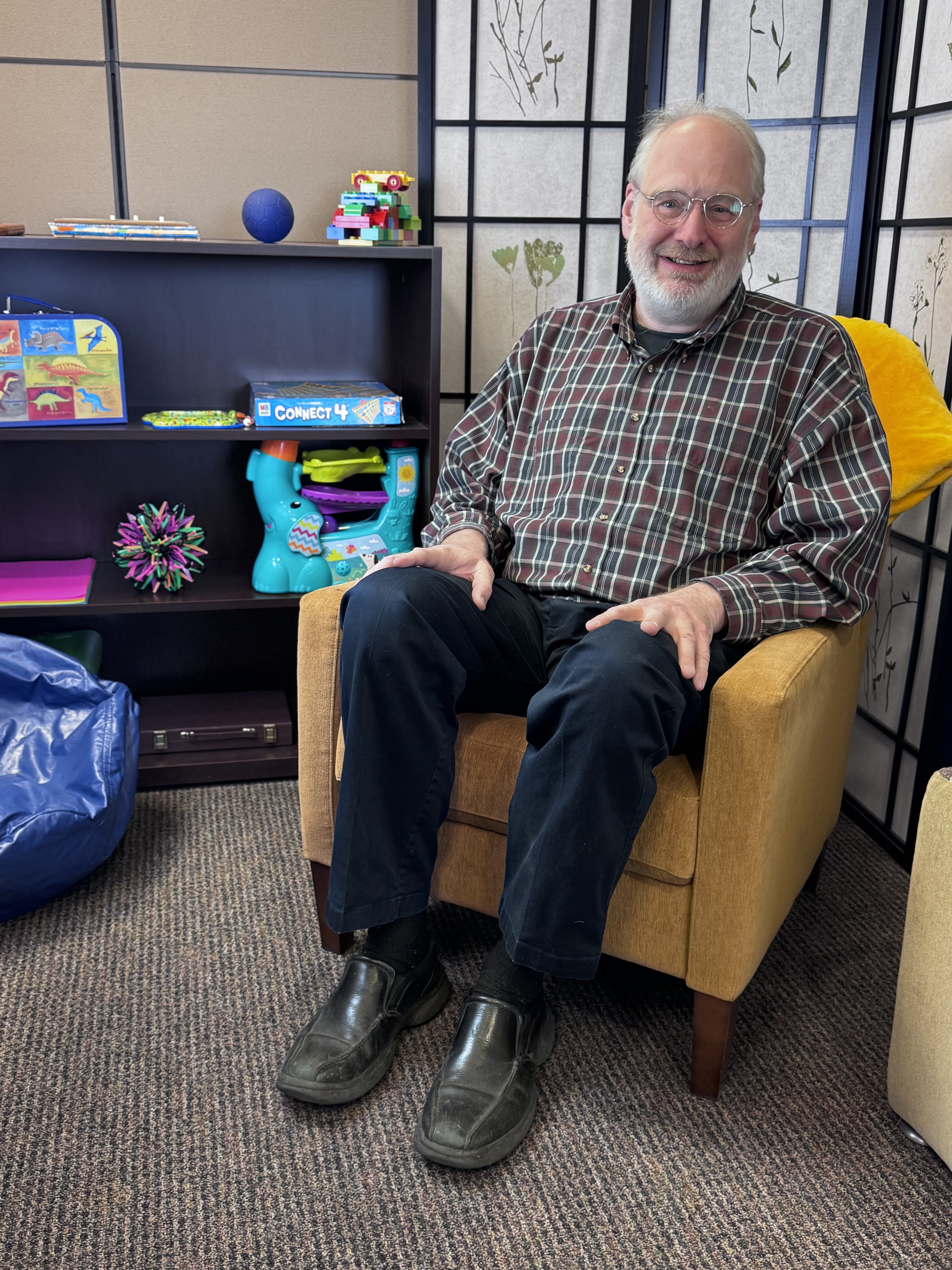
Sean Swindler is director of community program development and evaluation at the Kansas Center for Autism Research and Training, as well as project manager at Kansas University Center on Disabilities. In 2024, he was the first recipient of the the Judith Heumann Disability Rights Advocacy Award. Sean has built his career around support for autistic individuals and families.
Q: Tell us about your role at the Life Span Institute.
Since 2008, I have run our autism resource center, which is our primary way to assist families from all over the state of Kansas in navigating the very complex system autistic individuals face from early childhood and diagnostics to transition in adulthood.
I also help with the Kansas Family Support Center was created through a grant from the state of Kansas to allow us to do more direct interventions for families in crisis, for example, or autistic kids in danger of being institutionalized or going into foster care. The Kansas Family Support Center has been an exciting extension of what we've done to really be able to provide additional supports for families.
As part of my work, I also am involved in statewide public policy efforts. That sometimes means being a part of work groups that look at how policies affect families and people with autism. It can mean being a part of groups that make recommendations to improve how systems work for people. So part of my role in supporting families is staying on top of the changes in state and federal policy — things like Medicaid Home and Community Based services, IDEA/Special Education, Supplemental Security Income — that impact people in their daily lives.
Q: What are you most proud of in your work?
It is really exciting to get to be a part of some of the innovative work and research that's being done. That includes helping research teams to recruit participants and to work with our community partners. I'm also really excited to be a part of the KU Medical Center LEND team. I am the special education faculty for LEND, and before that, I was the self-advocate faculty member for LEND.
What I most like doing is talking to families, self-advocates and adults with autism to help them find the resources they need. And I'm the parent of a 24-year-old with autism and intellectual disability. So, I've been in the shoes a lot of these families, and a lot of times the things that they're going through. I can relate to them by pointing to a time when I've had that question or had that struggle as well.
Q: What prepared you for this work?
I was going to be a high school English and social studies teacher. And while I was in school, I got a job at a residential service provider to do direct support work with people with intellectual disabilities, and I did that for three years.
After enjoying being a substitute teacher in special education classrooms, a job at the ARC of Douglas County opened up to be their advocacy coordinator, along with the opportunity to be the coordinator for the Self-Advocate Coalition of Kansas (SACK). SACK is a state self-advocates group for adults with intellectual disabilities and helps them have a voice in public policy. I love politics and public policy — that's a hobby — so that was really exciting to me.
From there, I’ve been fortunate to get to work at different levels of government, including assistant director of an agency that provided targeted case management. And then I landed at KCART in 2008.
Somewhere in the middle of all that, my son, when he was 6 years old, was diagnosed with autism — and, subsequently, intellectual disability. So, I was in the field first, and then that happened. I'm interested in the work, but just personal as well, with my being a parent or a child with autism.
Q: What is unexpected or misunderstood in your area?
Navigating the special education system, navigating Medicaid, navigating insurance — whether you have Medicaid or private insurance — it’s all incredibly complex when you’re trying to get services and support for a child with autism or intellectual disability. It feels like every part of the system is set up to make it difficult to access. I talk to families who are sometimes in crisis, and they need support now.
The other thing I think people don't understand is how really challenging it can be to have a child with autism, or to be an individual with autism. People in the Autism community really need places to connect, where there's not going to be judgment, and they can be completely open about what is going on and what support they need.
Q: Who do you hope is helped by your work?
Individuals with autism and their families. I hope they can really get help and understand that there are other people out there who've gone through this, and that while it takes some advocacy, we can find the support they need.
Q: What are your interests when you’re not at work?
My son is 24 years old, and last year, he moved into his own place for the first time, with support. He has worked about 15 hours a week with job coaching support. It's been exciting to see him grow and embrace being on his own, even though we still have some challenges.
I really enjoy politics and public policy. I'm a politics junkie. I watch C-Span for fun, that kind of thing. And, I've always been interested in music, and am way into the Beatles. I am a very amateur songwriter — I write my own songs and record them. Nobody will ever hear them because I am a hideous singer!